Break-Even Point Explained: What It Means for Businesses
Reviewed by Ed WilkinsonLast updated: February 16, 2026 2:39 pm

Image credit: Kindel Media @Pexels
In this article:
The concept of the break-even point is fundamental in both financial management and business operations. It represents the stage at which total revenue equals total costs, meaning a business neither makes a profit nor incurs a loss. Calculating the break-even point helps business owners, entrepreneurs and finance teams plan sustainably. Below we explain what the break-even point is, how to calculate it, and how to use it to inform decisions.
What is the Break-Even Point?
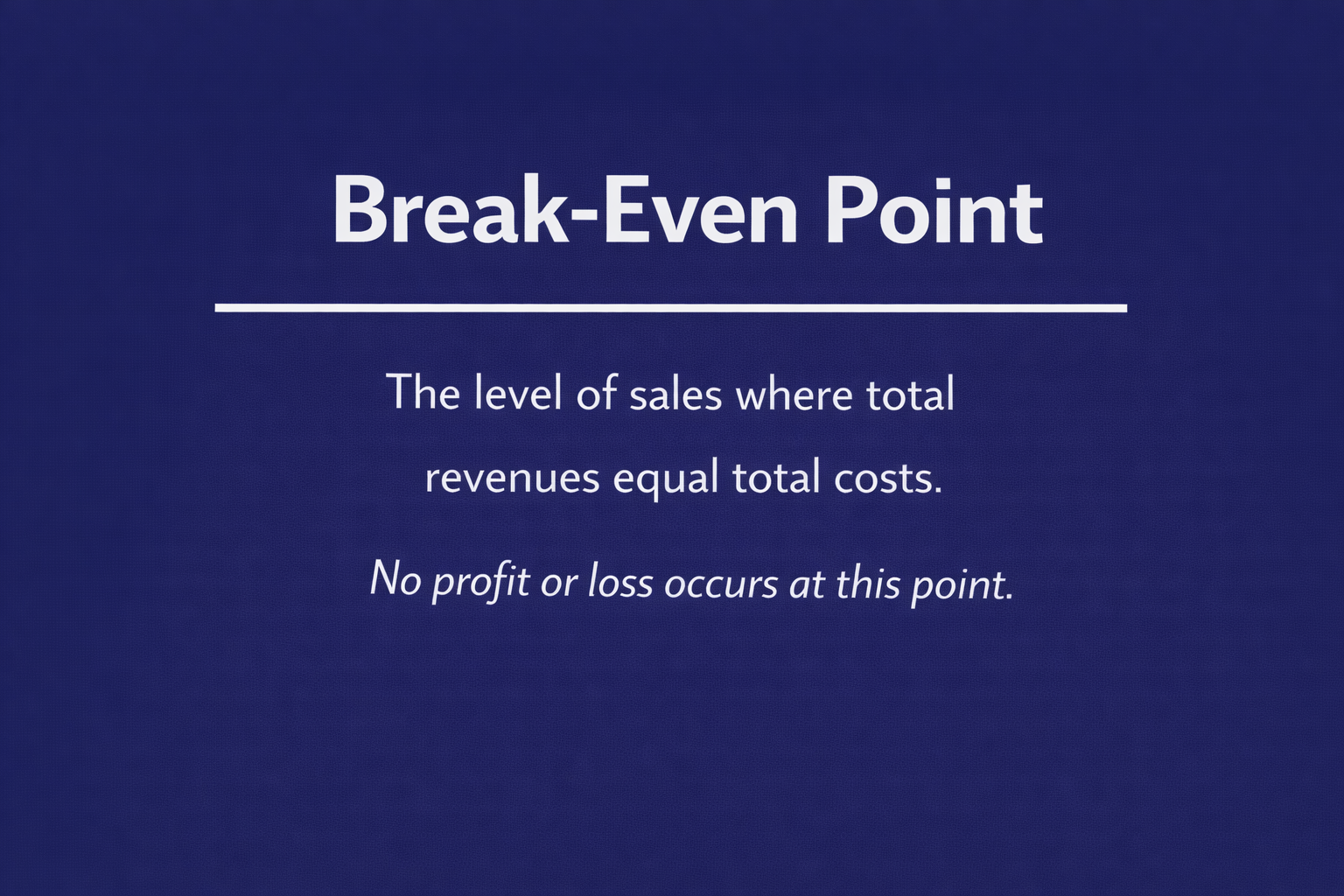
The break-even point (BEP) is the level of production and sales at which a business’s revenue exactly covers its costs. At this point, all costs involved in delivering the product or service, such as materials, labour and overheads, are offset by the income generated from sales. It is a key metric for assessing the financial viability of a product or a business and for checking that operations are not running at a loss.
Components of the Break-Even Analysis
- Fixed Costs: These are costs that remain largely constant within a relevant range of activity, regardless of output. Examples include premises rent, salaried staff and insurance premiums.
- Variable Costs: These vary with activity or sales volume. Examples include raw materials, direct labour and production-related utilities. Managing them effectively can materially affect profitability.
- Sales Revenue: This is income from selling goods or services. It depends on price and volume. Pricing should balance competitiveness with sustainable margins.
Understanding these components helps businesses set operational and financial targets that align with market conditions and business objectives. By monitoring them, companies can make informed decisions about scaling production, adjusting pricing or implementing cost-control measures.
Strategic Importance of Break-Even Analysis
Determining the break-even point helps with planning for profitability. It enables teams to understand the minimum sales volume needed to cover operating costs, which is particularly useful in the early stages of a product launch or when considering expansion. This analysis can support decisions about investing in new technologies or exploring new markets.
Break-even analysis is also valuable for risk assessment. It provides a framework for evaluating the potential financial impact of new ventures or changes in the market environment. Knowing the break-even point allows businesses to set benchmarks for financial performance and operational efficiency.
With interest rates and consumer spending subject to change in 2026 and beyond, applying break-even analysis with precision helps businesses remain resilient, adaptable and financially sound in shifting conditions.
Calculating the Break-Even Point
To determine the break-even point, use the following formula:
Break-Even Point (Units) = Fixed Costs / (Selling Price per Unit – Variable Cost per Unit)
This calculation reveals how many units a business needs to sell to cover all costs. It can inform pricing, cost management and profit planning. In revenue terms, another useful expression is: Break-even sales revenue = Fixed Costs / Contribution margin ratio, where the contribution margin ratio is (Selling price per unit − Variable cost per unit) / Selling price per unit.
Extended Example of Break-Even Calculation
- Identify the fixed costs, for instance, £30,000.
- Assess the variable cost per unit, e.g. £5.
- Determine the selling price per unit, for example, £10.
- Apply these values to the formula: BEP = £30,000 / (£10 – £5) = 6,000 units.
The calculation illustrates that the business must sell 6,000 units to reach its break-even point. This underscores the importance of understanding both fixed and variable costs when setting price points that support financial sustainability.
Additional Considerations in Break-Even Analysis
When applying the break-even formula, it is important to consider the impact of external economic factors. For instance, if borrowing costs change, businesses may see variations in finance or overhead costs, which could affect both fixed and variable elements. Additionally, changes in consumer spending behaviour can influence the achievable selling price per unit, thereby altering the break-even point.
- Regular review of cost structures and pricing strategies in response to economic shifts helps maintain profitability.
- Understanding market trends and consumer demand can guide adjustments in production levels and pricing to meet the break-even point efficiently.
Incorporating these considerations into financial analysis supports a more robust approach to achieving and maintaining profitability. Note the limitations: break-even analysis assumes constant unit prices and costs, linear relationships and, in its simple form, a single product. Multi-product businesses often use a weighted average contribution to estimate the break-even point.
Impact of Inflation and Economic Changes on Break-Even Analysis
Given the economic landscape of 2026, with noticeable inflation1 and shifts in consumer purchasing power, businesses should regularly update their break-even calculations to reflect current costs and market prices. It is advisable to monitor these indicators closely:
- Changes in the cost of raw materials as influenced by global economic conditions and local market factors.
- Variations in labour costs, which can fluctuate due to changes in minimum wage laws or the general cost of living.
By staying informed about these changes, businesses can adjust strategies promptly to safeguard their financial health. This proactive approach not only helps meet current obligations but also positions the business for future stability.
Why the Break-Even Point Matters
Understanding the break-even point provides several advantages:
- Financial Planning: It aids in setting realistic targets and preparing budgets. By understanding when the business may start to generate profit, managers can make informed decisions about resource allocation and manage cash flow more effectively.
- Pricing Strategy: Break-even analysis informs how a product is priced, balancing competitiveness with profitability. It helps set prices that cover all costs while remaining attractive to customers.
- Risk Management: Knowing the break-even point helps businesses understand the level of risk in launching new products or changing production processes. It supports contingency planning and can reduce potential losses.
- Performance Measurement: It acts as a benchmark for measuring operational efficiency and productivity. Comparing actual performance against the break-even point can highlight areas for improvement.
Break-even analysis can also be important when seeking funding. Investors and lenders may review it to assess a company’s financial resilience and capacity to service debt or deliver returns. In a variable economic environment, a clear understanding of your break-even point can reassure stakeholders about the business’s stability.
It is also a practical tool for decision-making. For example, if a company knows it will break even after selling 1,000 units, it can set specific sales targets and build marketing and operational plans to achieve them.
Regularly revisiting and recalculating the break-even point helps businesses remain agile. If the cost of raw materials increases due to inflation or other factors, understanding how this affects the break-even point allows you to adjust pricing or reduce costs elsewhere.
In summary, break-even analysis is more than a metric; it supports strategic planning, risk management and everyday decision-making, which are all crucial for sustaining growth in a changing economic landscape.
When to Conduct a Break-Even Analysis
Break-even analysis is an essential, ongoing component of strategic management, helping maintain financial health and inform decisions. Regularly performing this analysis can influence many stages of business operations and planning.
Key Instances for Conducting Break-Even Analysis
Understanding when to conduct a break-even analysis can help businesses navigate financial decisions more effectively. Here are the critical instances:
- Before initiating a new venture or product line, to estimate viability and financial requirements.
- When evaluating significant capital investments such as new technology or facilities, which could alter cost structures.
- Prior to scaling up operations, to determine how increased production will affect profitability and when additional sales will cover the cost of expansion.
- While preparing for discussions with potential investors or creditors, to present a clear picture of the business’s financial position.
- Following significant changes in market conditions or internal adjustments that could impact costs or pricing.
Additional Considerations for Effective Break-Even Analysis
Beyond the traditional triggers, businesses should also consider other factors that may warrant a fresh look at financial thresholds:
- Regulatory changes that impact operational costs, such as modifications in tax laws or minimum wage adjustments.
- Economic shifts, including inflation or changes in consumer spending behaviour, which can affect input costs and pricing flexibility.
- Technological advancements that streamline operations or reduce costs, potentially lowering the break-even threshold.
In 2026, with the Bank of England’s base rate2 subject to change, businesses should keep abreast of interest rate decisions and broader economic trends to maintain relevant financial strategies. This proactive approach helps enterprises align operations and financial plans with evolving conditions.
In summary, regular and timely break-even analysis is not just about survival but about building a path to profitability and growth. By anticipating the financial impacts of business decisions and external factors, companies can position themselves to compete effectively.
A Financial Adviser Can Help
Whether you are a new entrepreneur or an established business owner, applying break-even analysis can be complex. A professional, regulated financial adviser can provide guidance tailored to your circumstances, helping you refine cost structures, review pricing strategies and strengthen overall financial planning.
FinancialAdvisers.co.uk can connect you with FCA-authorised and regulated financial advisers in your area. We do not provide financial advice ourselves.
If you choose to seek advice, you can visit FinancialAdvisers.co.uk to learn more and to check advisers’ credentials, fees and services. This content is for general information only and does not constitute financial advice.
This article contains external links for further information on topics. Whilst all attempts are made to verify the trustworthiness of these external sources, we accept no responsibilty for the upkeep or security of these external websites. Some of these links in particular are annotated below: