Bull Markets: Definitions & Impacts
Reviewed by Neil AinsworthLast updated: February 16, 2026 2:17 pm

Image credit: Tima Miroshnichenko @Pexels
In this article:
The term bull market is widely used to describe periods when asset prices, typically shares, rise for a sustained time and optimism builds. This guide explains what a bull market is, how it tends to unfold, and what it may mean for different investment approaches. It is educational in nature and not personal advice.
Understanding a Bull Market
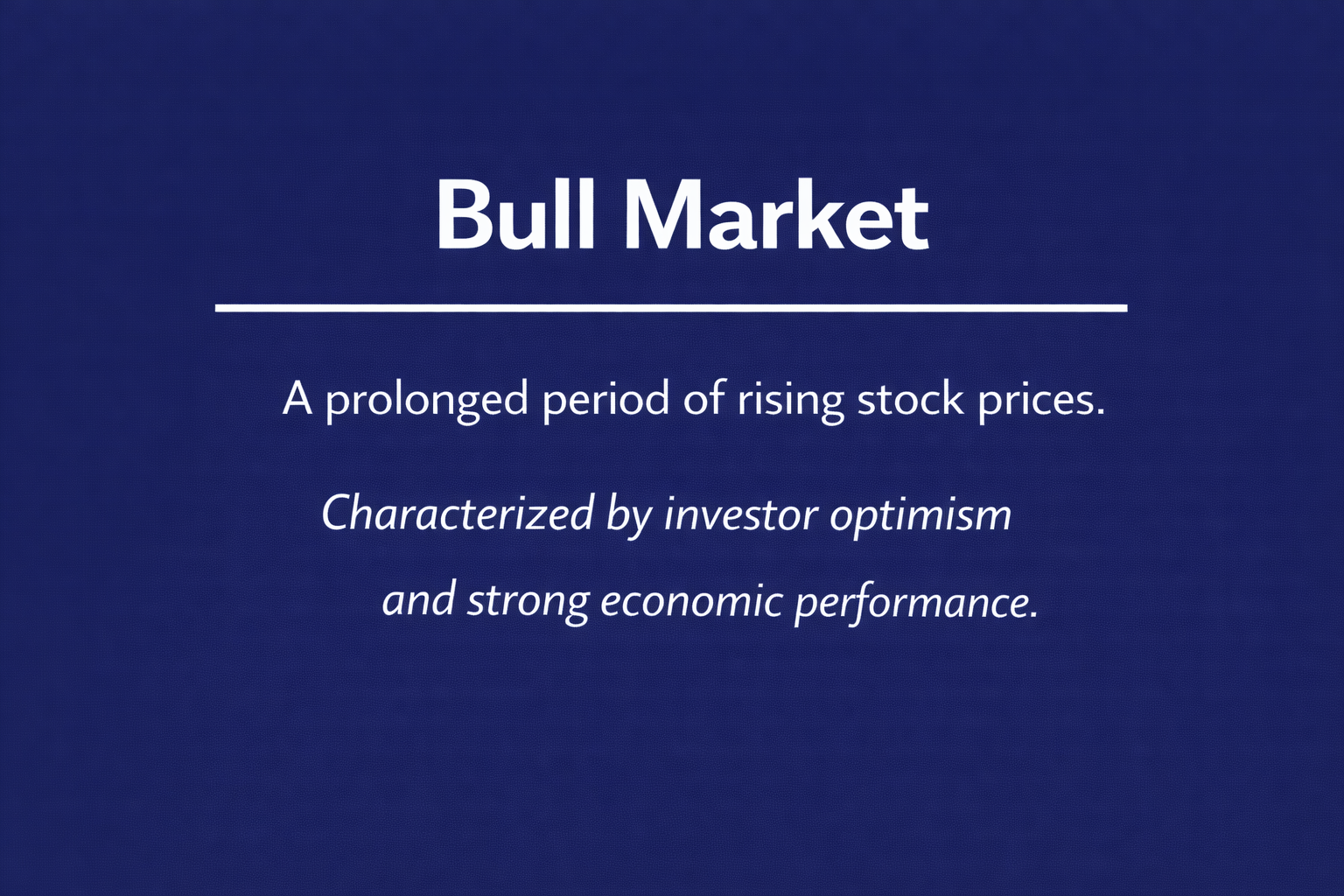
A bull market refers to a period in the financial markets characterised by a sustained rise in asset prices, most commonly equities. It is typically accompanied by improving sentiment and optimistic expectations for the economy. The term ‘bull’ is often linked to the upward thrust of a bull’s horns, echoing rising markets. Such conditions can draw in more participants and may be associated with higher trading activity.
Characteristics of a Bull Market
The following key characteristics define a bull market:
- Sustained Increase in Prices: The primary feature of a bull market is a broad-based, longer-term rise in share prices across multiple sectors.
- Strong Economy: A bull market often coincides with a robust or improving economy. Common indicators include falling unemployment, solid GDP growth, and healthy corporate earnings. Exact growth rates vary by period and country.
- Investor Confidence: Optimism typically prevails during bull markets. Investors are more willing to buy shares in anticipation of continued gains. Confidence can also be influenced by monetary and fiscal policy.
Determining the Start of a Bull Market
Identifying the beginning of a bull market can be challenging, as it requires observing persistent upward trends over time. As a rule of thumb, analysts often say a bull market is underway when major equity indices, such as the FTSE 100 or the S&P 500, have risen by 20% or more from a recent closing low, without a subsequent 20% decline. This convention is not an official designation and should be considered alongside the wider economic and market context.
Extended Market Participation
During a bull market, experienced investors may become more active, and new participants often enter the market, encouraged by recent gains and a sense of stability. While prices may be rising, values can still fluctuate, and risks remain, so careful research and a clear plan are important.
Financial education and, where appropriate, regulated financial advice can help you understand and navigate bull markets, aligning any decisions with your goals, time horizon and risk tolerance. Remember that the value of investments can go down as well as up, and you may get back less than you invest.
Phases of a Bull Market
Bull markets are often described in three phases, each marked by different behaviours and market trends:
- Accumulation: The first phase typically begins after a downturn. Some investors start to buy in anticipation of recovery. Sentiment is cautious but improving, and institutional investors may gradually increase exposure to equities.
- Public Participation: As conditions improve, a broader range of investors enters the market. Visible improvements in indicators such as employment, corporate earnings and output can draw attention. Rising demand lifts prices and attracts media coverage, further supporting momentum.
- Exuberance: The final phase is marked by heightened enthusiasm and strong price gains. Prices can reach stretched levels as speculative activity increases. This phase can be followed by sharp corrections, particularly if sentiment has become detached from fundamentals.
Additional Considerations in Each Phase
- In the Accumulation phase, thorough due diligence is essential. The effects of the prior downturn can linger, affecting company performance and investor confidence.
- During the Public Participation phase, diversification and periodic portfolio reviews can help align holdings with evolving conditions across sectors.
- The Exuberance phase calls for careful risk management. Be wary of overvalued assets and consider disciplined rules around position sizing, rebalancing or crystallising gains.
Each phase of a bull market presents distinct opportunities and risks. Understanding these patterns can help investors plan and make informed decisions while adhering to sound risk management principles.
Impact on Investment Strategies
In rising markets, some investors adjust their approach. Common examples include:
- Buy and Hold: Purchasing shares and holding them through market cycles to participate in any longer-term upward trend. This can help smooth volatility over time but still carries risk.
- Increased Equity Exposure: Some investors tilt their portfolios towards equities to seek higher returns, where suitable for their objectives, time horizon and risk tolerance.
- Sector Rotation: Shifting exposure to sectors that often benefit during economic upturns, such as technology or consumer-facing businesses. This relies on timely execution and carries the risk of being out of step with the cycle.
Practical tactics for buoyant markets
In addition, investors sometimes consider:
- Utilising Stop-Loss Orders: Setting stop-loss levels can help limit downside. Be aware that in fast-moving or illiquid markets, execution may occur at a price different from the stop level.
- Rebalancing Portfolios: Periodically adjusting holdings back to a target asset mix helps keep risk aligned with your plan as market moves change the weight of each asset class.
- Monitoring Interest Rate Changes: Central bank policy, including decisions by the Bank of England, influences borrowing costs and valuations. Higher interest rates can weigh on equities, particularly rate-sensitive sectors such as real estate and utilities.
It is important to remain disciplined, as buoyant markets can precede corrections. Regularly reviewing your plan and, if needed, seeking regulated advice can help manage risk.
Seeking Professional Advice
Speaking with a regulated financial adviser can provide guidance tailored to your circumstances. An adviser can help structure a portfolio that reflects your objectives and risk tolerance, and consider protective measures against potential downturns.
By considering these tactics within a disciplined framework, investors can aim to improve outcomes while managing risk. Nothing in this article constitutes personal advice.
A Financial Adviser Can Help
Navigating a bull market involves balancing opportunities with risk. A financial adviser can provide insights tailored to your goals and risk tolerance. They can help you:
- Analyse current market conditions and potential investment opportunities.
- Develop a diversified investment portfolio that aligns with the prevailing conditions while preparing for potential shifts.
- Implement approaches to crystallising gains and managing risk.
Working with an adviser can help you make informed decisions through different market environments and stay aligned with your long-term plan. This is not a guarantee of performance.
At FinancialAdvisers.co.uk, we understand the complexities of market cycles and the importance of regulated advice. We connect you with FCA-authorised and regulated financial advisers in your area who can help you consider your options and risks across bull markets and other investment landscapes, tailoring support to your circumstances. This article is for information only and does not constitute investment advice. Past performance is not a reliable indicator of future results. Capital is at risk.