Learning About Intrinsic Value and Company Valuation
Reviewed by Neil AinsworthLast updated: February 16, 2026 2:13 pm

Image credit: Sergei Starostin @Pexels
In this article:
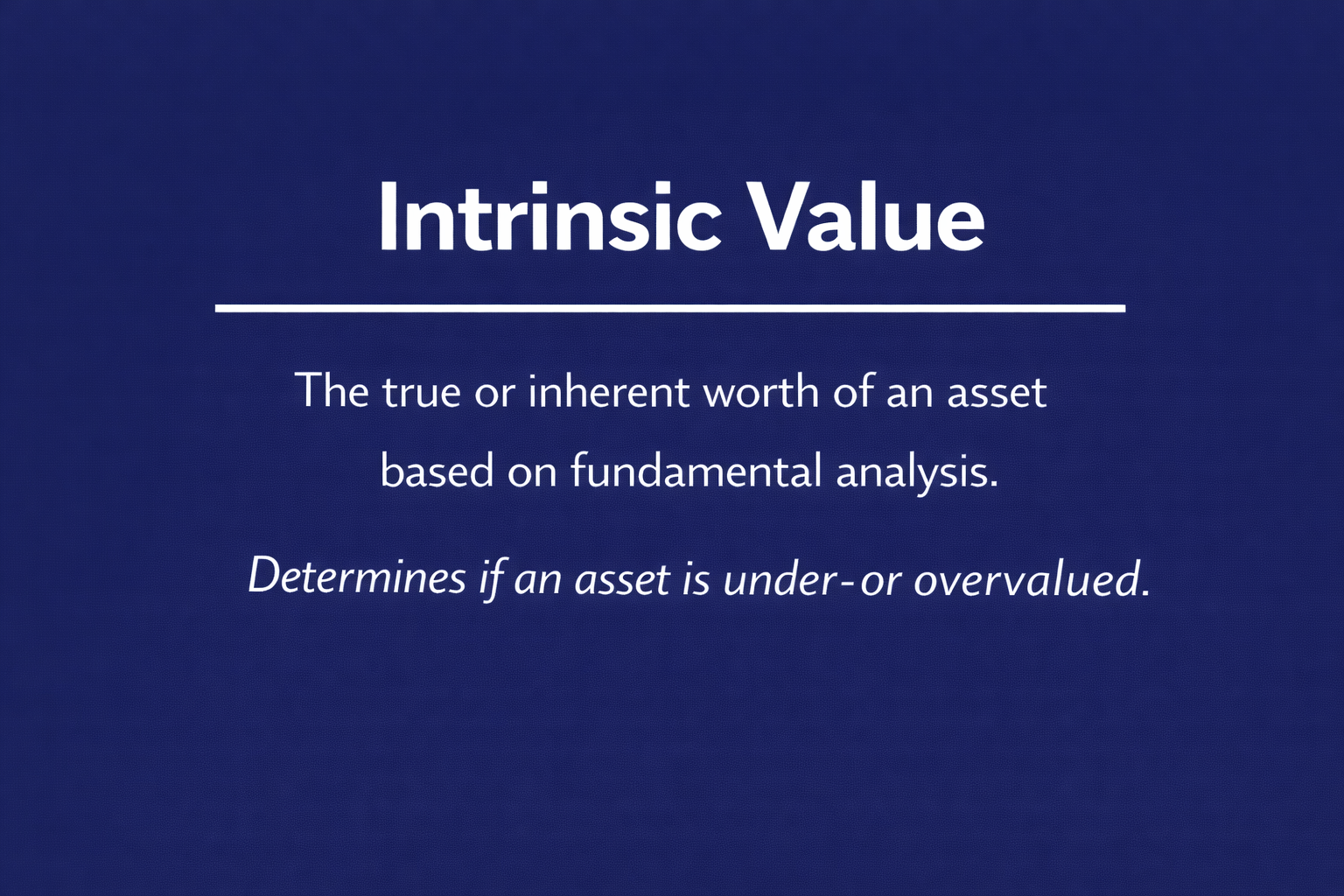
Intrinsic value is a core concept in investing that refers to the perceived or calculated underlying worth of an asset, investment, or company. This value may differ from the current market price. Investors and analysts estimate intrinsic value to judge whether an asset appears underpriced, overpriced, or fairly valued. This article explains what intrinsic value is, common ways to estimate it, and how it can inform investment decisions. It is provided for general information only and does not constitute investment advice.
The Concept of Intrinsic Value
Intrinsic value is central to value investing, a discipline associated with investors such as Benjamin Graham1 and Warren Buffett2. It involves looking beyond headline market prices to assess a business’s fundamental economics and the prospects implied by its financial statements and strategy.
Unlike prices influenced by short‑term sentiment, trends, or supply–demand imbalances, intrinsic value aims to reflect long‑term expectations based on factors such as cash generation, returns on capital, and competitive position.
Estimating intrinsic value is not merely an academic exercise; it is a practical framework for judging the sustainability of a company’s performance and balance‑sheet strength. Used with appropriate caution, it can help investors focus on fundamentals rather than market noise. Past performance is not a reliable indicator of future results.
Key Components of Intrinsic Value
Intrinsic value calculation incorporates several key financial metrics, which include but are not limited to:
- Earnings before interest and taxes (EBIT)
- Net income
- Free cash flow
- Expected growth rates in revenues and earnings
These metrics anchor valuation to operational reality, emphasising evidence from financial performance and reasonable forward-looking assumptions rather than transient market sentiment.
A critical ingredient in models such as Discounted Cash Flow (DCF) is the discount rate. In practice, this is often based on a company’s weighted average cost of capital (WACC), which depends on factors such as risk‑free government bond yields, the equity risk premium, the company’s leverage, and sector risk. Choosing an appropriate discount rate is essential because it converts future cash flows into today’s terms and can materially affect the valuation.
Overall, intrinsic value promotes a disciplined approach to evaluating opportunities. It can help investors identify situations in which the market price and fundamentals appear misaligned. However, no valuation method is definitive; consider a range of factors and, if unsure, seek regulated financial advice.
Calculating Intrinsic Value
There are several ways to estimate intrinsic value, and the most suitable approach depends on the asset and the quality of available information. Here are some commonly used methods:
Discounted Cash Flow (DCF) Method
The Discounted Cash Flow (DCF) method projects the free cash flows a business may generate and discounts them back to a present value using a rate that reflects the risk of those cash flows (typically the WACC). Robust DCF work requires explicit assumptions about revenue growth, margins, reinvestment, and a terminal value, and should be stress‑tested with sensitivity analysis because small changes in key inputs can lead to large swings in the result.
Dividend Discount Model (DDM)
The Dividend Discount Model (DDM) is particularly useful for companies that pay regular dividends. The DDM approach calculates a stock’s intrinsic value by considering the present value of the projected dividends over the company’s expected life. The rationale here is that a stock is worth the sum of all its future dividend payments, discounted back to their present value. This model is highly dependent on the stability and predictability of dividend payouts, making it more suitable for established firms in stable industries. For firms that use share buybacks or retain earnings for growth, alternative approaches may be more appropriate.
Asset-Based Valuation
This approach involves valuing a company based on the value of its assets. It is straightforward: add up all the assets on the balance sheet and subtract liabilities to arrive at the net asset value (NAV). This method is particularly relevant for investment sectors where tangible assets play a critical role, such as real estate or manufacturing. Be aware that book values may diverge from market values, intangible assets may be material, and periodic revaluation may be required to maintain relevance.
Economic Value Added (EVA) Method
Another method that can be used to determine the intrinsic value of a company is the Economic Value Added (EVA) approach. EVA represents the surplus value created by an investment after deducting the cost of all capital involved. A common formulation is EVA = Net Operating Profit After Tax (NOPAT) minus a capital charge (WACC × invested capital). EVA can help assess whether a company is generating returns above its cost of capital and therefore creating economic value for shareholders.
Each method of calculating intrinsic value serves different purposes and is suitable for various types of investments. Using several approaches and comparing results can provide a fuller picture and reduce reliance on any single assumption set. No model can predict the future with certainty; investments can go down as well as up, and you may get back less than you invest.
Implications of Intrinsic Value in Investment
Understanding and using intrinsic value is critical for investors aiming to buy or sell assets at favourable prices. Here are some practical implications:
- Identifying potential mispricing: Comparing a reasoned estimate of intrinsic value with the market price may highlight opportunities where the price appears below value, or risks where it appears above. A margin‑of‑safety mindset can help manage uncertainty in the estimates.
- Portfolio management: Knowing the intrinsic value helps inform decisions on which holdings to maintain, trim, or add to. A long‑term focus on fundamentally strong companies can support disciplined rebalancing rather than reactive trading.
- Risk assessment: Valuation work forces explicit consideration of risks and opportunities, providing a clearer picture of future prospects and potential downside. It looks beyond short‑term price moves to the stability and sustainability of the underlying business.
However, calculating intrinsic value is not without challenges. The accuracy of any estimate depends heavily on the inputs used in the chosen models. Forecasting errors, unexpected economic changes, or incorrect assumptions can all lead to misvaluation.
For example, the discount rate in a DCF is pivotal. Even a modest change in this rate, or in growth and margin assumptions, can materially alter the output, which is why sensitivity and scenario analysis are important.
Moreover, the dynamic nature of markets requires that these calculations are regularly updated. During periods of economic instability or rapid expansion, intrinsic values may need to be revisited to reflect changing indicators and company performance metrics.
To assist in navigating these complexities, investors are advised to employ a diversified approach to valuation, using multiple models to corroborate estimates. By combining methods such as DCF, Dividend Discount Models, and Asset‑Based Valuations, investors can gain a more balanced and comprehensive understanding of an asset’s worth. This strategy reduces reliance on any single source of information and mitigates the risks of valuation errors.
It is also beneficial for investors to stay informed about macroeconomic trends and industry‑specific developments, which can influence intrinsic value estimations. Regular analysis and adaptation to changing conditions are essential components of a robust investment approach and align with the FCA’s emphasis on clear, fair and not misleading communications in the UK.
A Financial Adviser Can Help
Estimating intrinsic value can be complex and may require detailed financial data and specialised skills. A regulated financial adviser or qualified investment professional can help assess investments, select appropriate valuation methods, and interpret how market conditions might affect estimates.
If you prefer not to build valuations yourself, an adviser can also help construct and maintain a diversified portfolio aligned to your objectives and risk tolerance, and explain the trade‑offs involved. Advice will usually involve fees and charges.
FinancialAdvisers.co.uk can connect you with an FCA‑authorised and regulated financial adviser in your area. Whether you want help evaluating potential investments or developing a financial plan, our network can introduce you to professionals who may assist. Eligibility, costs and the scope of any advice will depend on your circumstances.
This article contains external links for further information on topics. Whilst all attempts are made to verify the trustworthiness of these external sources, we accept no responsibilty for the upkeep or security of these external websites. Some of these links in particular are annotated below: